A Brief Introduction
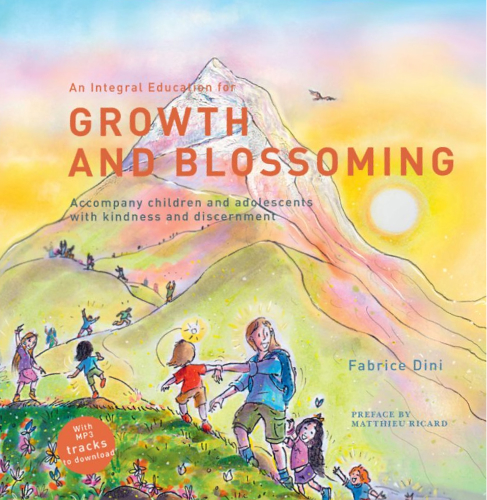
- daily physical activities and the mastery of one’s body and its functions;
- the development of the senses;
- the mastery of one’s character, the blossoming of core human values (courage, sincerity, goodness, nobility, etc.) as well as the intrinsic strengths of the child;
- the development of the ethical and the aesthetic sense
- the methodical refinement of the mental faculties (observation, concentration, memorization, imagination, reasoning, etc.);
- self-awareness.
All this offers the child a profound psychological knowledge of self, but also brings him to discover what makes him a unique being. He will develop self-mastery and the capacity to blossom while being at the service of people around him and nature. He will be able to keep enthusiasm, curiosity and the thirst for progress and perfection alive within himself throughout his life.
For many years, Fabrice Dini studied the Integral approach proposed by the Indian poet, yogi and philosopher Sri Aurobindo and implemented by his spiritual collaborator Mirra Alfassa. This book is directly inspired by their writings on the subject.
Physical education:
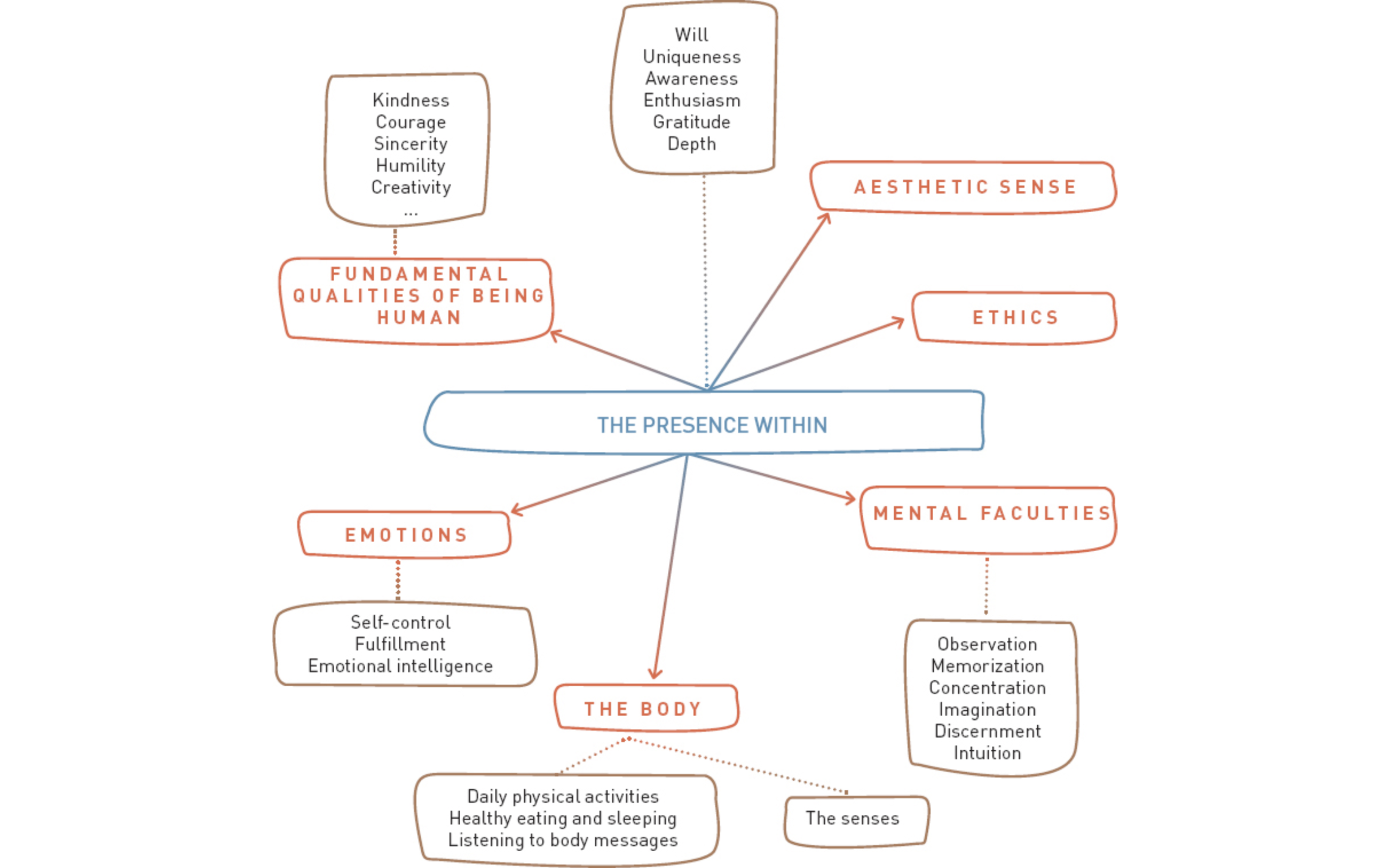
- One hour of daily physical activity – to cultivate flexibility, strength, agility, endurance, grace and to strengthen the character.
- Learn to listen to one’s body, its messages and its needs.
- A healthy lifestyle – various activities and postures, time of assimilation and rest, food, sleep.
- Cultivate sharp senses – train the scientist’s precision and the artist’s sensitivity.
Vital education (emotional):
- Develop emotional intelligence: become aware of emotions, reactions and impulses; to know and master oneself, and to flourish.
- Awaken the aesthetic sense – to express beauty and excellence through movements, emotions, thoughts and actions.
- Cultivate fundamental qualities of being human: the holistic human development is dependent upon fundamental qualities of being human, such as courage, sincerity, kindness, love of learning, solidarity.
- Develop a powerful will, at the service of what is noblest and highest.
Mental education:
- Develop mental faculties in a methodical and interesting way – observation, comparison, concentration, memorization, imagination, reason, intuition.
- Learn to communicate, express emotions and needs, and understand others.
- Develop ethics as well as integrity. Cultivate self-discipline.
- Train discernment – choose what is healthy and harmonious.
- Develop a lively, subtle and intuitive intelligence.
The Presence within :
- Cultivate what makes everyone a unique being with unique qualities. • Encourage self-awareness.
- Promote the depth of being and elevation, simplicity and aspiration.
- Cultivate enthusiasm, gratitude and wisdom.
- Encourage a noble and healthy aim in life – corresponding to the intrinsic nature of each – in the service of those around us, of nature and of the future.
- Foster aspiration for the good, the beautiful, the true.
The adults’ role:
- Be – teaching through example.
- Become – moving at one’s own pace towards one’s culmination (in order to serve others and the Earth).
- Continue to discover the infinite riches of life.
- Provide children with a balance between freedom and discipline.
- Be a friend, a sage, a safe guide.