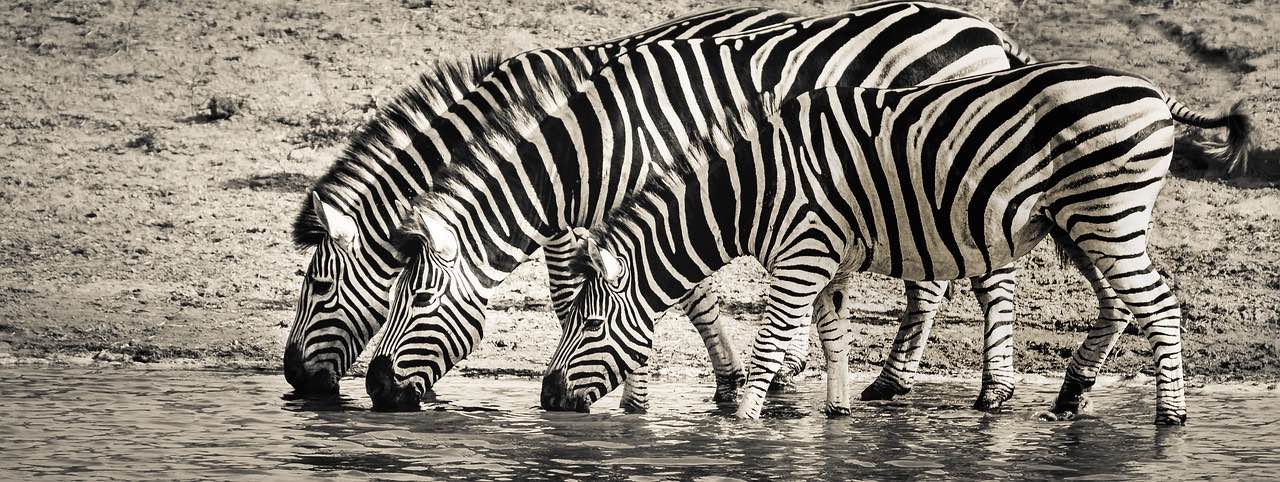
The Body
Our body is the prodigious outcome of more than 13 billion years of evolution.
This marvel of incredible complexity, with infinite potential and on which our lives depend, deserves all our attention and our solicitude. It is vital to offer daily physical activities to all children and to encourage them to listen to their bodies; we can explore the proper role of food and the subtle balance between action and assimilation, between effort and letting go. Breathing and contact with nature are also precious allies to systematically cultivate a healthy, strong, agile and enduring body in all children, thus providing them with a balanced and solid foundation for life.Scientific studies
In 2016, 39% of the world’s population was overweight and about 13% was obese. It seems that inactivity is responsible for 10% of deaths in the world.To remedy this situation, the World Health Organization (WHO) recommends one hour of physical activity daily for all children.
According to the WHO, appropriate physical activity helps young people develop healthy musculoskeletal (bones, muscles and joints) and cardiovascular (heart and lungs) systems, improve neuromuscular awareness (coordination and movement control), and maintain fitness weight.
It has been proven that physical activity not only brings many psychological benefits (notably a good antidote to symptoms of anxiety and depression), but it also contributes to the social development of youth: self-expression, social interaction, integration and self-confidence building. It also appears that young people who engage in physical activities adopt healthy behaviors (such as avoiding tobacco, alcohol and drugs) more readily and achieve better academic performances.
Physical activities are also an opportunity to develop many qualities such as determination, discipline, teamwork, equanimity, courage, concentration, dexterity, willingness, good spirit, self-control, etc.
Exercises
Listening to one’s body Close your eyes and observe your body: how does it feel (tense, tired, nervous)? Become aware of your position. Adopt a comfortable and upright position. How do you feel now? Scan your body from the top of the head to the tips of the toes and observe with kindness the different sensations that you feel. Is there a body part that you feel more strongly? Do you feel a pulsation, a tension, a heaviness, a tickling? If this is the case, take three breaths at the location of the sensation. Are there body parts that you do not feel? If your body could express its needs, what would it ask for? Does your body need anything? If we wish to devote more time to it, it is possible to continue like this: focus your attention on your head, feel your forehead and eyes, how does your jaw feel? Is it relaxed or tense? Relax it. Sense your neck and shoulders; relax your shoulders. Feel the air that inflates and deflates your chest, try to feel your heart beating. Concentrate now on your belly; how does it feel? Is it knotted, is it empty, does it make noises? Now concentrate on the pelvic area, then on your back. How are your legs? Calm or restless? Feel your ankles, the soles of your feet, and then move your toes, stretch gently. It is also possible, when there is a body sensation, to simply remain present with this sensation, to observe its evolution as well as the emotions, thoughts and images that arise during the exercise.Settle down in a quiet place where you will not be disturbed for a few minutes. Sit in a comfortable and upright position to explore these audio tracks.
The Senses
We can accompany children in their sensory development so that they acquire both the precision and knowledge of the scientist and the sensitivity and creativity of the artist. When the artist is looking at a face, it is the testimony of a lifetime that she/he discovers, as if every event and emotion had left an impression on its way. When a bird is singing, the composer or poet perceives a luminous symphony, a crystalline flash that breaks the silence; when the painter observes a field of sunflowers, it is like a field of fire ablaze before her/his eyes, as if the Sun in all its splendor was burning in the meadows. Why leave all these joys to the artist or the poet alone?We can train the precision and knowledge of the scientist and the sensitivity and creativity of the artist.
Scientific Studies
Numerous studies have shown that sensory development has decisive impacts on many other areas of the child’s development. Thus, stimulation of the sense of touch would help children to integrate abstract ideas in a concrete and experiential way. Indeed, based on various studies carried out over 15 years, Cabrera and Cotosi discovered that hands-on exploration contributes not only to understanding abstract concepts but also to four mental faculties essential to learning: making distinctions, recognizing relationships, organizing systems, and taking on several perspectives.Exploration contributes not only to understanding abstract concepts but also to four mental faculties essential to learning.
Exercises
To develop one’s sense of taste and smell: During a meal, prompt them to pay attention to the smells of the different foods, to learn the names of the various condiments and ingredients, the textures of different cheeses, etc., then blindfold their eyes during the next meal and ask them to guess what’s on the menu. To broaden their ability to appreciate different flavors, let them discover and appreciate the tang of pepper, ginger or chili; the astringency of tea, blueberries or sea buckthorn berries; the bitterness of grapefruit or chicory, etc. Let them discover the peppery and sweet juniper berries that look woody and resinous; the slightly camphorated and sweetened fennel seeds that resemble anise, and whose taste gradually rises in the mouth, leaving a stable and refined sweetness on the palate; explore local or exotic fruits; discern spices that account for the richness of many merchants, such as cinnamon, saffron, mustard seeds, cardamom, ginger, clove and turmeric. This can also be an opportunity to introduce subjects such as history and geography.Nature Pedagogy
Nature is infinite in its richness, its creativity and its generosity. It has always inspired artists, scientists, writers, great designers, athletes, farmers… All of them draw from its genius, its inexhaustible source of wealth and well-being. From infinite details to its immeasurable grandeur, it can and makes everything possible: does it not make oceans float in the sky? Nature is also a precious ally for teachers: its beauty, the richness of its fauna and flora, the infinity of its forms, the gamut of colors and scents, its incessant evolution, its purity and abundance, the mystical dance of seasons; all these facets make it the ideal place to know, discover and study the world. What teacher can offer such a range of experiences, sensory delights, objects and phenomena in class?Nature offers ideal conditions for experiential and dynamic learning, with enthusiasm and wonder. It is perfect to cultivate the body: motor skills, agility, dexterity, coordination; foster the senses and the aesthetic sense; develop and strengthen fundamental human values such as perseverance, courage, humility, gratitude; and also the strengths of character such as endurance, leadership, teamwork, prudence, self-mastery. Outdoor pedagogy is also ideal for training mental faculties such as observation, comparison, concentration, memorization, etc. All subjects can be taught in nature: mathematics (discovering the shape, weight and size of objects, classifying pieces of wood, counting), languages (vocabulary, poetry), communication (collaboration, writing), geography, science, history, etc.Schools that are partially in nature have been the subject of much research; the latter has demonstrated that children better develop their motor skills, have heightened concentration abilities and more creativity, are ill less often and less long; they have a better emotional balance, learn to play together, help one another more and have fewer conflicts among them. As many teachers who go out into nature with their classes have noticed, children that are “more difficult to manage in class” become sometimes less troublesome once in nature and even demonstrate unsuspected qualities. Hyperactivity as well as many other modern diseases are attenuated in nature, when they do not simply disappear. As a result, the relationship with the Earth is also positively transformed – we better protect what we love.To learn in order to know, to study in order to have the knowledge of the secrets of Nature and of life, to educate oneself in order to increase one’s consciousness, to discipline oneself in order to be master of oneself, to overcome one’s weakness, one’s incapacity and ignorance, to prepare oneself in order to progress in life towards a goal that is nobler and vaster, more generous and more true. Mirra Alfassa
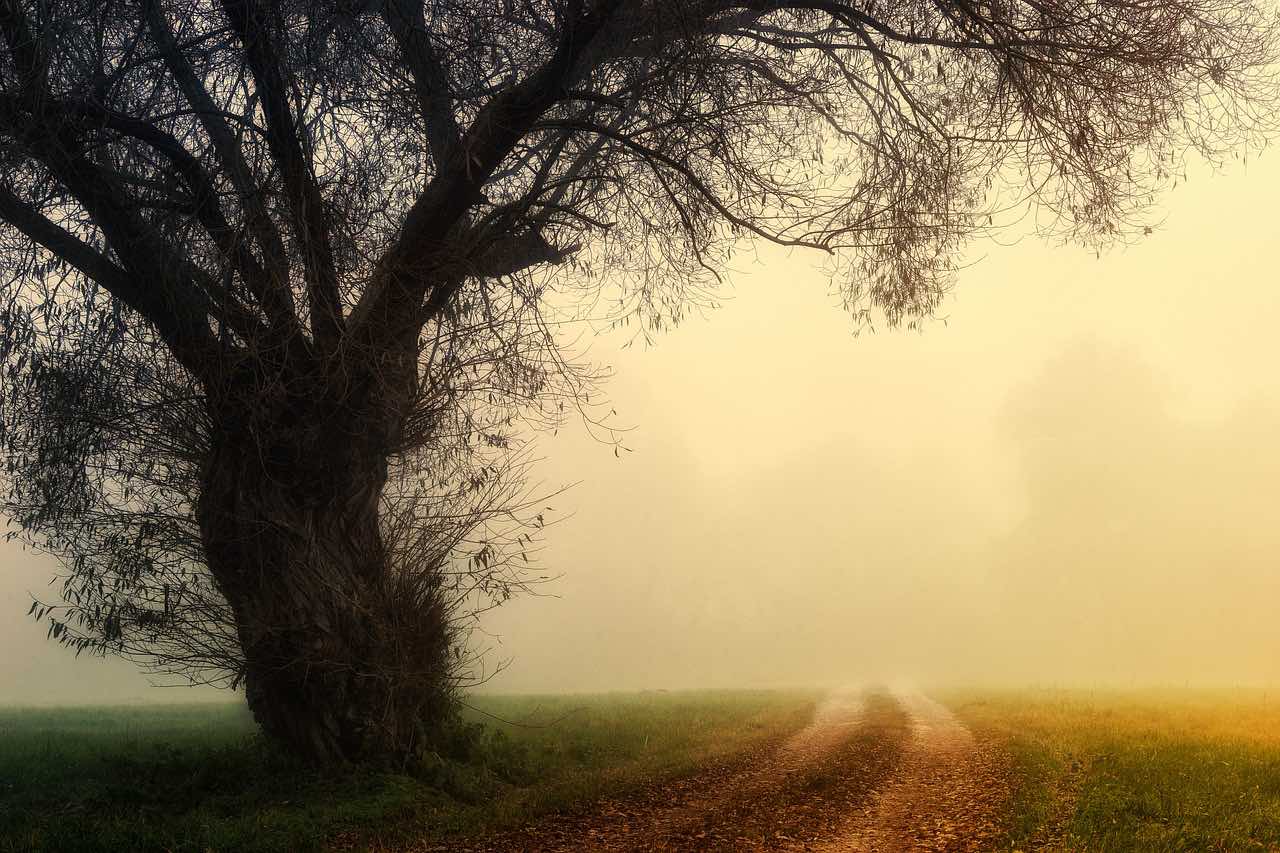
Exercises for Learning through Nature
With enthusiasm and perseverance, like an explorer or a scientist, such as Darwin or Rousseau, study birds’ songs, animals’ tracks, flowers, trees, rocks, clouds, etc.We will begin by cultivating their sense of observation: how many colors does this bird have and where? At what time of the day or year does it sing? How is its beak, how are its legs and wings? How does it fly? Does it have different songs? Does it live in a flock or alone? At what time does it get up and go to sleep? The second step is comparison: we will study another bird and note the differences. We can draw the bird, study its nest, write what we know about it, make an oral presentation, write a poem, play with numbers: how much does it weigh, how does it rise so high in the sky, how much does it eat every day? We can research this bird, study it (book, applications, Internet) and see if our observations correspond to the knowledge of ornithologists.
It is not a matter of learning things by heart but of discovering them through experience.
- Finding a tree in the forest: go into a forest and blindfold the child; take his hand and lead him to a tree (by making detours); let him get to know this tree, then bring him back to the starting point (by making some more detours). Remove the blindfold and ask him to find his tree.
- In your living space or during a stroll in the forest, ask the children to find the widest possible range of different odors in a given time (10 minutes, for example). Invite them to formulate what each smell evokes for them (an image, music, etc.).
- With his eyes blindfolded, give the child a shell, a pebble or a leaf; let him explore this object, then put it among other objects and ask him to find it again.