Mental Faculties
What are the mental faculties?
At school, teaching is traditionally organized into a series of subjects (English, Geography, History, Mathematics, Science, etc.) and most of the time studying these subjects is devoted to memorizing them: learning the places and dates of battles, the names of rivers and mountains, conjugation, multiplication tables, spelling, French and German vocabulary, etc. We use our memorization ability throughout our schooling (a few hours a day for 11 years or more) and this, in general, without having properly learned how to memorize things! In an integral approach, we will first focus on the development of mental faculties:Observation, comparison, concentration, judgment, memory, reasoning, imagination, logic and intuition.
Starting from the natural curiosity of the children, their interests, we can bring them to perfect the tools that are necessary to acquire knowledge. Throughout the development and refinement of these faculties, we use classical branches of knowledge, but the emphasis is on the development of faculties, not on the amount of information to be learned or the number of subjects addressed. Once these faculties are developed, the child can devote himself to studying all the subjects with formidable efficacy.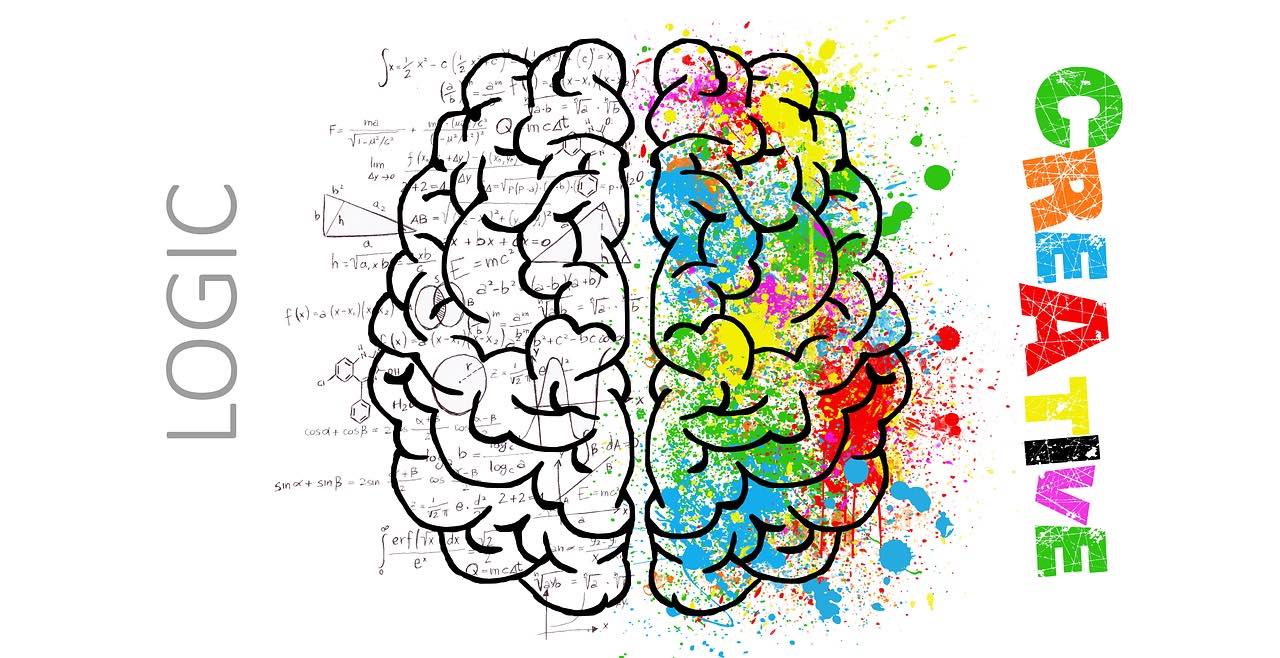
Are they genuises, or beings with superhuman powers?
Lu Chao recited from memory the number pi to its 67,890th decimal place. Boris Konrad memorized 21 names and birth dates in two minutes; Simon Reinhard memorized random words for five minutes, then had ten minutes to recall them, he holds the world record with 124 words; Dominic O’Brien memorized 2,385 random binary digits in thirty minutes. »Here are the teachers’ comments about young Dominic O’Brien: “He is very slow, when he raises his hand, if he is not questioned at once, he does not remember his question anymore”, “He will never succeed”, “He dreams when he is doing math, he loses the thread of his thoughts”, “He daydreams too much, does not pay enough attention to details”. How many children have been thus discouraged, convinced by adults that they are useless?
One day, Dominic O’Brien decided to improve his memory, and, out of nowhere, without being forced to do it, he modeled one of the most prodigious memories in the world. He was Memory World Champion eight times!
The first condition is therefore to want to learn. Forcing children to learn is absurd and inefficient. The second condition is to make them discover memorization techniques.
Find here one technique, many more in the book of Fabrice Dini…
Exercises
The method of places
The method of loci is one of the most widely used methods of memorization to date. We find the first traces of this technique in Latin writings (Rhetorica ad Herennium) around 85 BC. It helped a speaker quickly memorize a speech. The person first visited a place (church, market, etc.) and followed a predefined route several times, always stopping at the same places. Once the route and stops were memorized, he cut his speech up into parts, each symbolized by a strong image; then, using his imagination, he associated each symbol or image with a stop. Thus, Clemens Mayer – World Memory Champion in 2005 and 2006 – memorized 1,040 numbers in 30 minutes, using a mental pathway with 300 stopping points throughout his home. One can also use public places, a museum or any other building and thus set up several routes. This technique can be used to remember many things: a telephone conversation, the periodic table, a list of things to do, and so on. Create a route in a location you know well with ten steps, for example, when entering your home:- Entrance door
- Garage
- Utility room
- Staircase
- Living room
- Kitchen
- Corridor
- Office
- Bathroom
- Bedroom
Here are the things I have to remember: take out the trash, change the cat’s litter, phone my insurance agent, reply to an email regarding a trek on Sunday, etc. An example of visualization:
- I arrive at the front door (a humongous trash can with a pink tassel is in front of the door and I have to ask the neighbor for help to move it before being able to enter);
- I go into the garage (the horrible smell of the cat’s litter obliges me to put on a gas mask);
- After that, I go to the utility room (my insurer jumps out from behind the washing machine to discuss my insurance);
- I climb the stairs (I see myself with my trekking shoes climbing to the top of a high mountain in a storm); etc. Your turn now: create your own 10-step journey into your home and choose something you’ve always dreamed of learning, or a list that may be useful to know by heart (for your work, your passion), or for example, the six basic human virtues defined by positive psychology: wisdom, courage, humanity, justice, temperance and transcendence. Put some humor into it, enjoy it!